CONGRATULATIONS! YOU HAVE STUMBLED INTO "THE SHALLOW ZONE." WATCH OUT FOR THE ROCKS. SOME OF THEM ARE SHARP.
If you're looking for a blog with meaningful content on the important issues of the day, you've come to the wrong place. This is the shallows, my friend. Nothing but shallowness as far as the eye can see. Let someone else make sense of things. I like it here.
About Me
MY SHALLOW MISSION STATEMENT
Not that there's any weight to it...
IN A WORLD FILLED WITH COMPLEX POLITICAL ISSUES, SOCIAL INEQUALITY, AND FINANCIAL UNCERTAINTY, I CONSIDER IT MY GIFT TO YOU, MY READER, TO OFFER THIS SHALLOW LITTLE HAVEN, WHERE NOTHING IS TOO SHALLOW, TOO INSIGNIFICANT, OR TOO RIDICULOUS TO JUSTIFY OUR ATTENTION. IN OTHER WORDS, IF IT'S NOT IMPORTANT....SO WHAT? NEITHER WAS MARILYN MONROE'S BRA SIZE. AND THAT STILL SELLS MAGAZINES, DOESN'T IT?
VIDEO OF THE MONTH
Monday, March 19, 2012
THAT WAS PUNK, THIS WAS NEW WAVE: WHY I'M STILL WAITING TO MEET JOHN TAYLOR
LOVELY LINDA, SULTRY STEVIE, AND ATOMIC BOMB ANN: 70s IDOLS OF MY CALLOW YOUTH
When I graduated from high school in 1977 (yeah, I know it was a long time ago), I had only one real objective: to get a summer job and make enough money to move to California where, I was absolutely certain, I would be able to make a name for myself as a singer. It wasn't a pipe dream. I have a good voice, probably way better than the majority of people who claim that they have good voices, and I was a songwriter as well, although, not ever having learned to play a musical instrument for the purpose of accompanying myself, that fact was hardly my strongest selling point. Still, I could sing and my heart was deeply immersed in rock and roll and all of its accompanying mythology. So what else was I supposed to do? Go to college and get a degree in something that would allow me to have a high-paying career and possibly one day own a ranch-style home and a gas grill? Not on your life. I was a rock and roll time bomb. Move over, Stevie Nicks, Linda Ronstadt, and Ann Wilson. Your replacement is on her way. (Well, maybe not Ann Wilson. I mean, what would Nancy say?)
Then, one afternoon, I came home from my new job at Pizza Hut (it was horrible; they made us wear brown uniforms with plaid trim) and my older brother asked me if I wanted to listen to the new album he'd just bought. Sure, I told him. What is it? "Never Mind The Bollocks by The Sex Pistols," he replied. Two...maybe three...minutes into the album, I had completely renounced my California dreamin' and was wondering how much it would cost to fly to England and meet Johnny Rotten.
ANARCHY HITS THE AIRWAVES
I'm still not sure what it was that clicked inside of me when I heard that album. I had and still have a great love and respect for classic rock, always including among my favorite musicians of all time The Beatles, The Rolling Stones, and The Kinks. One of my absolute favorite musical things to do is work out harmonies (my long-time guitarist, with whom I still occasionally perform, always chided me for automatically slipping into the harmony whenever he backed me on a song, which I am embarrassed to say I don't even realize I'm doing). But I was 18 and had issues with...well, pretty much everything. A few hours before, I would have killed for a cool, guazy white smock like the ones Linda Ronstadt wore to show off her Southern California tan. After hearing "Anarchy In The UK" for the third time in a row ("Play it just one more time, Frank, come on, man, please!"), I realized that I required a new uniform and it wasn't made of filmy gauze with billowy sleeves. An hour later, I was still trying to hunt down a pair of scissors so that I could cut up my favorite black T-shirt and widen the shreds in the knees of my Levi flare jeans, which I couldn't wait to ditch in favor of a pair of skinny straight-legged jeans. And then I needed to come up with a man's suit jacket, preferably on the boxy side, and a skinny black tie, and there was still the matter of whether or not to go for broke and stick a safety pin through my nostril...
THE BUZZCOCKS: ENGLAND'S MOST FASHIONABLE PUNKS
It wasn't all about the clothes, of course. It was the music and the attitude and that gut-level charge that hit me like a sucker punch when Steve Jones hit the opening chords of "Anarchy In The UK" accompanied by John Lydon's maniacal laugh before he growls, "Right nooooow...." I loved the chaos of Jones' unschooled guitar chops mingling with Glen Matlock's (Sid Vicious' more talented and much less bloody predeccessor) bare bones bass, the primal poetry and jaw-dropping audacity of Lydon's lyrics, the band's unapologetic indifference to rock and roll conceits and radio friendly melody lines. In that first, brief introduction to The Sex Pistols, I understood completely what they were, and why they existed, and how their sudden emergence on the music scene had changed, profoundly and forever, the entire industry, rendering its superstars obsolete and exposing them for the establishment puppets that they really were. Of course, I didn't actually think all of this as I was listening to the album, but the point is, I got it, on a visceral level, and it changed my life.
Six months later, I was in London, dragging my one sad suitcase (I borrowed it from a friend's sister because my family never traveled and no one had a suitcase) through the door of the youth hostel that had been recommended to me by the cabbie who drove me in from Heathrow and wouldn't let me tip him because he had a daughter my age and wanted to make sure I had enough money to buy something to eat.
"Go over there and tell 'em Joe the cab driver said to give you a plate of bangers and mash," he said, pointing to a nondescript little pub on the corner across from where we were on Oxford Street. "You never 'ad bangers and mash, 'ave you?"
"No. What is it?"
"You just tell 'em you want a plate of bangers and mash. Tell 'em Joe sent you over. They know me there."
"Okay...Joe," I said.
I waited til he drove off and his little black cab disappeared into traffic before walking in the opposite direction toward the youth hostel. That was my last semi-normal interaction with a Londoner for a long time. I spent three awful nights in an eight bed room at the hostel before I met Dawn and Simon (she was a borderline punk who worked at a shop on Portabello Road, he was her gay flatmate and a part-time hairdresser who read Tarot cards on the side), who for some inexplicable reason liked me well enough to invite me to stay in their flat on Queensway in Bayswater. I spent my days babysitting for Dawn's older sister, who paid me partly in cash and partly in alcohol, and my nights pub crawling in search of a glimpse of The Sex Pistols. Saw Paul Cook once in a pub. (He was the drummer.) That was it. But by then it really didn't matter so much anymore. I had to go all the way to England to figure out that I had already missed the real punk scene, and that it had all happened in New York City, which was where Sex Pistols inventor Malcolm McLauren had first seen Richard Hell and been inspired to return to England and create the genre's first successful band. Not only that, but, after countless late night talks with Simon over beer and cold chips sloshed in vinegar (aka French fries, stateside), I realized that, while I still appreciated the music that came from the London punk scene, I was, at heart, actually a New Wave person.
RICHARD HELL, LEADER OF THE BLANK GENERATION AND AMERICAN PUNK ICON
NEW WAVE OR PUNK AFTERMATH?
LEATHER JACKETS AND STRIPED T-SHIRTS, A NEW WAVE STAPLE
TERRI NUNN OF BERLIN, AMERICAN NEW WAVE FASHION PLATE
There was a very definite difference. Sort of like the difference between rockers and mods in the 1960s. According to Simon, "Punk is about getting pissed and breaking chairs and looking like a pile of shit just to shock people. New Wave is about the music and the clothes. It's like a musical fashion statement. And you don't have people walking around proud to have snot dripping out of their nose."
Of course it's not really that cut and dried. There are blurred lines and overlapping sensibilities, just as in any other art form. One of the main components of punk rock (so called) is its diffidence toward standard musicianship. The whole point was that you didn't need to be able to play your instrument as long as you had something (preferably angry) to say. But that only works for so long. Steve Jones might have started out as a terrible guitar player backing up a snarling front man, but he ended up as a pretty good one, mainly because you can't base an entire music career on anger and sneering expressions. I didn't fit in with the punks because being pissed off wasn't who I was, it was how I felt, at that particular time, at that particular moment, and the music captured some of that and threw it back at me. As Simon said the night he was dying my hair in black cherry cellophane (to match my wild aura, he explained), "You're too good a singer to just scream out at people on stage. And they won't hear it anyway. I see you more as a New Wave version of Julie Christie."
"Uh...okay. Except Julie Christie doesn't sing."
"But you could still be a New Wave version of her. I can really see it. Hmmm...have you ever thought of wearing bangs?"
"Bangers and mash?"
"What? Oh...God, no. That's the trouble with this country. People eat too many sausages. It's because the Royal Family is descended from Germans. If it wasn't for Nico and Dauchsunds, I'd say obliterate the entire culture and start over again. Are we actually supposed to forgive them for Kraftwerk? Please. And stop turning your head to look out the window. He's not coming. I've already told you, he's a completely undependable person and completely homophobic as well..."
Can't quite remember the name of the guy who I was looking for out the window. I think it was Kevin. But in this instance, Simon was wrong. He did come. Funny thing about that, though. Two years in the UK and never once did I date anyone who remotely resembled a Sex Pistol or Richard Hell or anyone else from the punk scene. By the time I left the UK and headed back to the US, I had my heart set on meeting John Taylor of Duran Duran. I even wrote a song about him and sang it for unwitting audiences in an endless succession of bars and clubs in an equally endless succession of nowhere little towns and cities all up and down the East Coast for the two years I devoted myself entirely to music before deciding to devote myself entirely to love, which, as it turned out, was the wrong choice. But I still have a rock and roll heart, planted in classic rock soil, fired in 1970s punk, and glinting with the shameless glamour of 1980s New Wave. And, sorry, Simon, but I even like Kraftwerk. Now as for bangers and mash, well, that's another story for another post. Thank you! Good night!
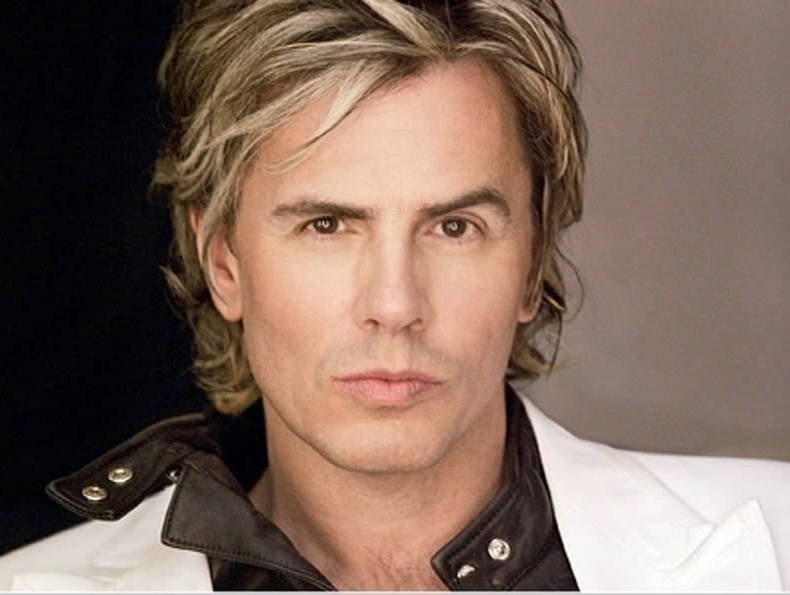
REMEMBER: NEW WAVE MAY BE GONE, BUT JOHN TAYLOR IS FOREVER
Skol. xoxoxoxoxoxoxxoxoxoxxoxoxoxo
Friday, March 16, 2012
MAD MEN RETURNS....WITH MORE JOAN
So, finally, after a 14 month hiatus, AMC's Madmen is set to return to television screens on March 25. As a long time fan of the show (just call me a Maddict), I'm excited, of course, to see what Don Draper and company have been doing all this time. When we last saw the gang from Sterling, Cooper, Draper, Pryce, Don had just proposed to Megan (a huge surprise), Pete was gaining a conscience (it was inevitable), Peggy was coming into her own as a professional ad woman (it's been an uphill climb) and Betty was still unhappy (does the woman ever think of anything but herself?). And then there is Joan.
There are a lot of reasons to watch Mad Men. The exemplary writing, the painstaking attention to anachronistic detail, the clothes, the hair styles, the spot on depictions of political incorrectness, both socially and in the workplace. But, for my money, one of the best reasons is Joan Harris (nee Holloway), the redheaded office bombshell played to perfection by actress Christina Hendricks.
I know it probably says something about me that my favorite character on the show is also one of the most anachronistic. Women like Joan Harris don't really exist anymore. I mean, her obvious intelligence and social savvy aside, Joan really wants nothing more than to be happy with the man of her choosing. Never mind that she could probably run circles around any of the other women on the show when it comes to staying cool in the midst of a crisis, or handling herself with the necessary aplomb in an awkward social or workplace situation. Joan Harris may look like a sexpot from the 1950s, but she has the mind of a politician and the inborn smarts of a natural diplomat. But for all that, she is, without question, a woman of her time, even though that time is rapidly changing and taking the rest of the world with it. When we last saw Joan, she was pregnant by her longtime lover, Roger Sterling, after a spontaneous tryst in an alleyway following a late night mugging. Added to the troublesome fact that Roger is married, Joan's own spouse, a doctor, had just been dispatched to provide medical services to the troops in Viet Nam. What to do? Have an abortion, of course, and let Roger pay for it. But that would be too easy, and it wasn't, it turned out, what Joan wanted. Instead, our last glimpse of Joan was shadowed by perfidy as she decided to keep the baby (which she knew was Roger's) and do her best to convince her husband that it was actually his.
Oh, Joan. Big mistake. Not to mention uncharacteristically risky. But that's why I love her. For all of her workplace know-how and deceptively flattering ways (because that's how women get what they want in the world of Mad Men), Joan is a softie. She wants a baby, her maternal clock is ticking up a storm, and she's willing to risk it all to have that baby in her arms. I, personally, would not have made that choice, but I love Joan for being real and going after what she wants, even if what she wants isn't anywhere near as lofty as what the hard-driven Peggy or the pathologically selfish Betty want. Plus, when it comes to clock-stoppin' looks, there ain't nobody in the Mad Men universe like Joan. Peggy might look cute in her little office suits and Peter Pan collars. Betty might be the ice princess of Don Draper's former dreams in her stylish designer duds. But Joan has the curves and the strut that make men salivate. And in a world where making men drool is power, that's nothing to sneeze at.
Skol. xoxoxoxxoxoxoxoxoxoxo
There are a lot of reasons to watch Mad Men. The exemplary writing, the painstaking attention to anachronistic detail, the clothes, the hair styles, the spot on depictions of political incorrectness, both socially and in the workplace. But, for my money, one of the best reasons is Joan Harris (nee Holloway), the redheaded office bombshell played to perfection by actress Christina Hendricks.
I know it probably says something about me that my favorite character on the show is also one of the most anachronistic. Women like Joan Harris don't really exist anymore. I mean, her obvious intelligence and social savvy aside, Joan really wants nothing more than to be happy with the man of her choosing. Never mind that she could probably run circles around any of the other women on the show when it comes to staying cool in the midst of a crisis, or handling herself with the necessary aplomb in an awkward social or workplace situation. Joan Harris may look like a sexpot from the 1950s, but she has the mind of a politician and the inborn smarts of a natural diplomat. But for all that, she is, without question, a woman of her time, even though that time is rapidly changing and taking the rest of the world with it. When we last saw Joan, she was pregnant by her longtime lover, Roger Sterling, after a spontaneous tryst in an alleyway following a late night mugging. Added to the troublesome fact that Roger is married, Joan's own spouse, a doctor, had just been dispatched to provide medical services to the troops in Viet Nam. What to do? Have an abortion, of course, and let Roger pay for it. But that would be too easy, and it wasn't, it turned out, what Joan wanted. Instead, our last glimpse of Joan was shadowed by perfidy as she decided to keep the baby (which she knew was Roger's) and do her best to convince her husband that it was actually his.
Oh, Joan. Big mistake. Not to mention uncharacteristically risky. But that's why I love her. For all of her workplace know-how and deceptively flattering ways (because that's how women get what they want in the world of Mad Men), Joan is a softie. She wants a baby, her maternal clock is ticking up a storm, and she's willing to risk it all to have that baby in her arms. I, personally, would not have made that choice, but I love Joan for being real and going after what she wants, even if what she wants isn't anywhere near as lofty as what the hard-driven Peggy or the pathologically selfish Betty want. Plus, when it comes to clock-stoppin' looks, there ain't nobody in the Mad Men universe like Joan. Peggy might look cute in her little office suits and Peter Pan collars. Betty might be the ice princess of Don Draper's former dreams in her stylish designer duds. But Joan has the curves and the strut that make men salivate. And in a world where making men drool is power, that's nothing to sneeze at.
Skol. xoxoxoxxoxoxoxoxoxoxo
Wednesday, March 14, 2012
Sex Sells, But Singers Sound Better
A friend of mine suggested recently that I write a post on the propensity of current female pop stars to wear as little clothing as possible in concert and videos. I thought about it. I mean, if someone is kind enough to read this blog, I'd like to give that person what he or she (in this case, he) wants. But, to be perfectly honest, as far as I can tell, the pop stars of today are not that different from their predecessors in previous decades. Today's crop of exhibitionists just make more money being scantily-clad whilst showing off their (often) equally scanty talent. Even those with actual pipes, like Christina Aguilera or Lady Ga Ga, have made sex a main ingredient of their stage persona, a choice which no doubt is based on the undeniable fact that sex sells records. If it didn't, Susan Boyle's audience wouldn't be comprised mainly of middle-aged women, and the Fannys would be more than just an interesting footnote in music history. What are the Fannys, you ask? That's exactly my point. Let me clue you in.
FANNY BRICE
Fanny Brice, born Fania Borach in New York City in 1908, was the talented daughter of Hungarian Jewish parents who ran a saloon and made quite a bit of money doing it. But Fanny, as she was known professionally, was not content to just be comfortable and well-off. She had a taste for show business in her DNA and dropped out of high school to pursue a career as a burlesque performer. Although hardly "pretty" by modern show business standards, she had a good singing voice and a knack for keeping an audience's attention with a well-honed mixture of comedy sketches and music. By 1910, she was a featured performer in the Ziegfield Follies and had already created her most well-known comedic character, Baby Snooks. She was also known for her signature song, My Man, which was famously re-recorded by Barbra Streisand for Funny Girl, the 1968 movie based on Brice's life.
Brice's life was only slightly less dramatic than the movie based on it. Brice was married three times. The first marriage, to NYC barber Frank White, occurred when she was in her teens. The second, to high profile gambler Nicky Amstein, took place after the couple had been living together for six years. Prior to that, Amstein had been imprisoned in Sing Sing for wiretapping. Brice visited him every week for fourteen months. When that marriage ended in divorce, following Amstein's release from a second term in prison, this time for three years on a Wall Street bond theft charge, Brice took up with songwriter Billy Rose, in whose "Crazy Quilt" review she appeared. Unfortunately, that marriage failed as well. Brice never remarried.
But she continued to perform, taking Baby Snooks with her as she made the shift from the stage to radio, most notably on Tallulah Bankhead's The Big Show, on which she shared the bill with Groucho Marx and Jane Powell. As radio shows gave way to television, Brice's star began to fade along with the shrinking radio audience. She appeared on television only once, in June, 1950, on CBS's Popsicle Parade of Stars. Asked why she chose not to pursue a TV career, Brice said that she felt the character of Baby Snooks didn't work as well when seen by the audience. In truth, Brice's combination of old school burlesque and Yiddish shtick had become passe. The comedienne died on May 29th, 1951 in Hollywood of a cerebral hemorrhage. The final episode of her Baby Snooks radio show was broadcast that same night, as a memorial to its creator, whose career had spanned over forty years.
FANNY
Our second "Fanny" is not a person, but a band. A band, who, in their heyday, were famous not so much for their talent, which was formidable, but for the fact that they were four women playing their own instruments and writing most of their own songs. Not a common feat in the late 60s and early-to-mid 70s. Founded by guitarist June Millington and her sister, bassist Jean, both natives of Manila, Phillipines, with Americans Alice de Buhr on drums and Nicky Barclay on keyboard, Fanny was the first all-girl rock band to be signed to a major label, Reprise (a Warner imprint), in 1969. Like guitar god Jimi Hendrix before them, Fanny had to go to England to get their career jumpstarted, but once there, honed their musical skills opening for such acts as Humble Pie, Jethro Tull, and Slade. But even with tasty hits like "Charity Ball" and "Butter Boy", which made dents in The Billboard Hot 100 at #40 and #29, respectively, Fanny failed to find an audience in the United States.
Even after Patti Quatro, older sister of pre-punk wild child Suzie Quatro joined the band briefly in 1974 (replacing June, who left the band following the earlier departure of de Buhr) the writing on the wall was too clear to ignore. Fanny disbanded for good around 1975, their contribution to rock and roll, and to the role of women in that genre, largely unnoted, save for remarks such as the one made by long-time fan David Bowie in a 1999 interview in Rolling Stone. Calling Fanny "extraordinary", Bowie went on to say, ""One of the most important female bands in American rock has been buried without a trace. And that is Fanny. They were one of the finest... rock bands of their time, in about 1973. They were extraordinary... they're as important as anybody else who's ever been, ever; it just wasn't their time."
JUNE AND JEAN MILLINGTON
June Millington, called "the hottest female guitar player in the industry" by Guitar Player magazine, continues to work as a record producer and reunited with her sister and de Buhr for a concert at Berklee College of Music in 2007, where the band was given The ROCKRGRL Women of Valor Award for their contribution to the rock and roll industry.
So...back to that "sex sells" thing we were talking about at the start of this post. It's still true, of course. But, bottom line, ten years from now, the flavor of the month teenybopper pop star isn't going to look quite as fetching in Spandex and tall boots. But June Millington of Fanny will probably still be kicking ass on guitar.
To read an interview with Jean, go here.
Skol. xoxoxxoxoxoxoxxoxoxo
FANNY BRICE
Fanny Brice, born Fania Borach in New York City in 1908, was the talented daughter of Hungarian Jewish parents who ran a saloon and made quite a bit of money doing it. But Fanny, as she was known professionally, was not content to just be comfortable and well-off. She had a taste for show business in her DNA and dropped out of high school to pursue a career as a burlesque performer. Although hardly "pretty" by modern show business standards, she had a good singing voice and a knack for keeping an audience's attention with a well-honed mixture of comedy sketches and music. By 1910, she was a featured performer in the Ziegfield Follies and had already created her most well-known comedic character, Baby Snooks. She was also known for her signature song, My Man, which was famously re-recorded by Barbra Streisand for Funny Girl, the 1968 movie based on Brice's life.
Brice's life was only slightly less dramatic than the movie based on it. Brice was married three times. The first marriage, to NYC barber Frank White, occurred when she was in her teens. The second, to high profile gambler Nicky Amstein, took place after the couple had been living together for six years. Prior to that, Amstein had been imprisoned in Sing Sing for wiretapping. Brice visited him every week for fourteen months. When that marriage ended in divorce, following Amstein's release from a second term in prison, this time for three years on a Wall Street bond theft charge, Brice took up with songwriter Billy Rose, in whose "Crazy Quilt" review she appeared. Unfortunately, that marriage failed as well. Brice never remarried.
But she continued to perform, taking Baby Snooks with her as she made the shift from the stage to radio, most notably on Tallulah Bankhead's The Big Show, on which she shared the bill with Groucho Marx and Jane Powell. As radio shows gave way to television, Brice's star began to fade along with the shrinking radio audience. She appeared on television only once, in June, 1950, on CBS's Popsicle Parade of Stars. Asked why she chose not to pursue a TV career, Brice said that she felt the character of Baby Snooks didn't work as well when seen by the audience. In truth, Brice's combination of old school burlesque and Yiddish shtick had become passe. The comedienne died on May 29th, 1951 in Hollywood of a cerebral hemorrhage. The final episode of her Baby Snooks radio show was broadcast that same night, as a memorial to its creator, whose career had spanned over forty years.
FANNY
Our second "Fanny" is not a person, but a band. A band, who, in their heyday, were famous not so much for their talent, which was formidable, but for the fact that they were four women playing their own instruments and writing most of their own songs. Not a common feat in the late 60s and early-to-mid 70s. Founded by guitarist June Millington and her sister, bassist Jean, both natives of Manila, Phillipines, with Americans Alice de Buhr on drums and Nicky Barclay on keyboard, Fanny was the first all-girl rock band to be signed to a major label, Reprise (a Warner imprint), in 1969. Like guitar god Jimi Hendrix before them, Fanny had to go to England to get their career jumpstarted, but once there, honed their musical skills opening for such acts as Humble Pie, Jethro Tull, and Slade. But even with tasty hits like "Charity Ball" and "Butter Boy", which made dents in The Billboard Hot 100 at #40 and #29, respectively, Fanny failed to find an audience in the United States.
Even after Patti Quatro, older sister of pre-punk wild child Suzie Quatro joined the band briefly in 1974 (replacing June, who left the band following the earlier departure of de Buhr) the writing on the wall was too clear to ignore. Fanny disbanded for good around 1975, their contribution to rock and roll, and to the role of women in that genre, largely unnoted, save for remarks such as the one made by long-time fan David Bowie in a 1999 interview in Rolling Stone. Calling Fanny "extraordinary", Bowie went on to say, ""One of the most important female bands in American rock has been buried without a trace. And that is Fanny. They were one of the finest... rock bands of their time, in about 1973. They were extraordinary... they're as important as anybody else who's ever been, ever; it just wasn't their time."
JUNE AND JEAN MILLINGTON
June Millington, called "the hottest female guitar player in the industry" by Guitar Player magazine, continues to work as a record producer and reunited with her sister and de Buhr for a concert at Berklee College of Music in 2007, where the band was given The ROCKRGRL Women of Valor Award for their contribution to the rock and roll industry.
So...back to that "sex sells" thing we were talking about at the start of this post. It's still true, of course. But, bottom line, ten years from now, the flavor of the month teenybopper pop star isn't going to look quite as fetching in Spandex and tall boots. But June Millington of Fanny will probably still be kicking ass on guitar.
To read an interview with Jean, go here.
Skol. xoxoxxoxoxoxoxxoxoxo
Saturday, March 10, 2012
Badfinger, Rock's Most Suicidal Band
Badfinger
Back in the early 1970s, when the British band Badfinger was all over the radio airwaves with hits like "Come and Get It", "Day After Day," and "Baby Blue", every DJ who played them made the inevitable comment that they sounded a lot like the Beatles. Well, duh. Of course they did. The band had been signed by the Beatles' Apple label in 1968, when they were known as The Iveys, and Paul McCartney wrote and produced "Come And Get It," which was the song that put Pete Ham, Ron Griffiths, Mike Gibbins, and Tom Evans on the rock and roll map of fame. Unfortunately, the band didn't just sound like the Beatles, they shared similar managerial woes with the Fab Four.
Pete Ham
After making American businessman Stan Polley their manager in 1970, Badfinger toured extensively and made lots of money, but were soon plunged into financial disarray when Apple bit the dust and their subsequent contract with Warner Bros resulted in missing escrow money and a debilitating loss of income when the label pulled the band's album, Wish You Were Here from record store shelves. Soon after, three days before his 28th birthday, band founder Ham hanged himself in his garage, leaving a suicide note in which he said some damning things about Polley and apologized to his girlfriend, Anne, and her son, Blair. His daughter Petera was born a month later.
Tom Evans
The surviving band members packed it in after Ham's death, forcing bassist Evans to work briefly as a London cabbie, a situation that did nothing to alleviate the depression that had enveloped him since his Ham's suicide. Evans' pain was made even more acute by the fact that he had seen Ham's body after rushing to his bandmate's house following a frantic call from Ham's girlfriend. Guitarist Joey Molland, who had replaced original axeman Griffiths in 1969, formed a new version of Badfinger in 1977, with Evans back on bass, but despite a subsequent tour and a minor hit with "Love Is Gonna Come At Last" on the Electra label, the new incanation of Badfinger fell prey to similar financial difficulties as before, compounded this time by creative differences between the new band members. By the early 80s, Molland and Evans were touring with respective, competing versions of Badfinger. Beleagured by lawsuits stemming from the early days of the original band and still battling depression, Evans began making nostalgic references to Ham, telling friends and family members. "I want to be where he is." In November of 1983, following a heated phone exchange with Molland regarding legal and financial woes, Evans followed his late friend's lead and hanged himself in the garden of his home in Richmond, England.
Joey Molland
Molland and yet another version of Badfinger, which included original drummer Mike Gibbins, toured throughout the remainder of the 80s, finally disbanding in 1989, when Gibbins left the band for good. Gibbins died in his sleep at his home in Florida in 2005. Molland can be found here, still making the best of what remains of Badfinger's name and legacy.
Back in the early 1970s, when the British band Badfinger was all over the radio airwaves with hits like "Come and Get It", "Day After Day," and "Baby Blue", every DJ who played them made the inevitable comment that they sounded a lot like the Beatles. Well, duh. Of course they did. The band had been signed by the Beatles' Apple label in 1968, when they were known as The Iveys, and Paul McCartney wrote and produced "Come And Get It," which was the song that put Pete Ham, Ron Griffiths, Mike Gibbins, and Tom Evans on the rock and roll map of fame. Unfortunately, the band didn't just sound like the Beatles, they shared similar managerial woes with the Fab Four.
Pete Ham
After making American businessman Stan Polley their manager in 1970, Badfinger toured extensively and made lots of money, but were soon plunged into financial disarray when Apple bit the dust and their subsequent contract with Warner Bros resulted in missing escrow money and a debilitating loss of income when the label pulled the band's album, Wish You Were Here from record store shelves. Soon after, three days before his 28th birthday, band founder Ham hanged himself in his garage, leaving a suicide note in which he said some damning things about Polley and apologized to his girlfriend, Anne, and her son, Blair. His daughter Petera was born a month later.
Tom Evans
The surviving band members packed it in after Ham's death, forcing bassist Evans to work briefly as a London cabbie, a situation that did nothing to alleviate the depression that had enveloped him since his Ham's suicide. Evans' pain was made even more acute by the fact that he had seen Ham's body after rushing to his bandmate's house following a frantic call from Ham's girlfriend. Guitarist Joey Molland, who had replaced original axeman Griffiths in 1969, formed a new version of Badfinger in 1977, with Evans back on bass, but despite a subsequent tour and a minor hit with "Love Is Gonna Come At Last" on the Electra label, the new incanation of Badfinger fell prey to similar financial difficulties as before, compounded this time by creative differences between the new band members. By the early 80s, Molland and Evans were touring with respective, competing versions of Badfinger. Beleagured by lawsuits stemming from the early days of the original band and still battling depression, Evans began making nostalgic references to Ham, telling friends and family members. "I want to be where he is." In November of 1983, following a heated phone exchange with Molland regarding legal and financial woes, Evans followed his late friend's lead and hanged himself in the garden of his home in Richmond, England.
Joey Molland
Molland and yet another version of Badfinger, which included original drummer Mike Gibbins, toured throughout the remainder of the 80s, finally disbanding in 1989, when Gibbins left the band for good. Gibbins died in his sleep at his home in Florida in 2005. Molland can be found here, still making the best of what remains of Badfinger's name and legacy.
Beyond Ethel Mertz
If Lucille Ball was America's "favorite redhead" during the 1950s and 60s, her I Love Lucy co-star and close friend Vivian Vance was without question "America's favorite frump." But it was only an act. Those of us who grew up watching the comedic exploits of Lucy and Ethel on TV were only seeing one side of the talented actress. Vivian Vance, born Vivian Roberta Jones on July 25, 1909, seemed an unlikely candidate for iconic status within the pop culture world when she was growing up in Cherryvale and, later, Independance, Kansas, the second of six children in a family where strict religious beliefs precluded any mention of her secret desire to become an actress. But although her future alter ego, Ethel Mertz existed mainly to provide Lucy Ricardo with a compliant sidekick, Vance had no qualms when it came to reaching for her own star. In fact, Vance (she took her surname from folklorist Vance Randolph) was so determined to become an actress that she once crawled out of her bedroom window in order to appear in a play at the local community theater after her mother had forbidden her to do so. Vance was a rebel, and when she was eighteen, she fled the strictures of her religious family and moved to Albuquerque, New Mexico (which also served as Ethel Mertz's fictitious hometown) to begin her career as an actress.
Vance's theatrical aspirations may have created familial problems in Kansas, but her talent wowed 'em in Albuquerque. In 1952, after helping to found The Little Albuquerque Theater and honing her skills in dozens of plays there, she made the big move to New York City, where she landed jobs in the chorus of a number of Broadway productions before wending her way to co-star status alongside Danny Kaye in a long-running production of Let's Face It. Vance stuck it out on Broadway until 1947 when she decided it was time to try her luck in Hollywood. But the shift to film did little to advance Vance's career. Roles in movies like The Blue Veil and The Secret Fury won positive reviews for the actress, but she was hardly a break-out sensation and soon found herself back on the stage, in a 1951 production of Voice of the Turtle at the La Jolla Playhouse. Enter Desi Arnaz.
As luck would have it, Arnaz was in the process of casting the new TV sitcom he and wife Lucille Ball were producing for television. Realizing that Ball's crazy redhead antics needed to be tempered by a more down-to-earth "best friend", Arnaz had been searching for an actress a few years older than his wife and quite a bit frumpier, but his initial picks for the role had been rejected by studio heads, one because of an alleged drinking problem, the other because of a contractual snafu. When a mutual friend, director Marc Daniels, took Arnaz to the La Jolla Playhouse to check out Vance's performance, Arnaz was convinced that he had finally found the right actress to play Ethel Mertz. However, Ball was not so certain. The 42-year-old Vance was too attractive to fit in with Ball's conceptualized view of the character. It was only when Vance agreed to gain an extra twenty pounds and to adopt a purposely frumpy wardrobe for the series that Ball agreed to give her the job. The two women were not great friends at first, but over time, they grew close, their relationship forged on a mutual respect for one another's talent.
Vance's respect for co-star William Frawley was less ardent. She reportedly disliked Frawley intensely, referring to him as "that stubborn little Irishman" and complaining that he was too old to play her husband. Frawley wasn't overly fond of Vance, either, according to those who knew them, but their mutual disdain seemed to create just the right balance of chemistry for the show. Vance's work as Ethel Mertz garnered her an Emmy in 1953 (she was the first actress to receive an Emmy for Best Supporting Actress), and she was nominated for the same role an additional four times. When the series ended in 1957, Vance continued to appear as Ball's best friend on "The Lucy Show", although, this time around, she insisted that her character be called "Vivian" and be given a more flattering wardrobe. Vance stayed with the series until it ended in the early 70s, but was increasingly absent from episodes as her interests took her back into the realm of film, and once again, to Broadway. But despite her objections, her fans insisted on seeing her as Ethel Mertz and often called her by that name when they saw her in public. It was a bittersweet testimony to the iconic figure that she had become, one that she never quite accepted, even at the end of her life. Vance had been married for 19 years to literary agent John Dobbs (ten years her junior) when, in 1977, she suffered a paralyzing stroke following a bout with breast cancer,and, two years later, succumbed to bone cancer. Vance died on August 17, 1979, her death effectively ending what had been one of the great comedic partnerships of all time and prompting long-time admirer Desi Arnaz to remark, " "It’s bad enough to lose one of the great artists we had the honor and the pleasure to work with, but it’s even harder to reconcile the loss of one of your best friends."
Thursday, March 8, 2012
Good-bye, Davy Jones
Actually, when I was a kid in the 60's watching "The Monkees" on network TV, I had a thing for Peter Tork, mainly because I'm a sucker for cute, goofy guys with awkward posture and inexplicable musical ability. But I was very sad nonetheless to hear of Davy Jone's sudden and unexpected passing at the tender age of 66. Hell, he was the youngest of the Monkees and, hands down, the best tambourine player of the lot. Plus he was a Brit, which made him especially cool and somewhat desirable despite his extremely short stature (did he really start out as a jockey? Mein gott!). Bottom line, with his demise, all hopes of a Monkees reunion are dead as well, which brings us to the sub-arc of this post. The remaining Beatles.
For the last couple of years, I've been going around asking people who they think will be "the last Beatle standing...Paul McCartney or Ringo Starr?" My money had always been on Sir Paul. Not because I don't like Ringo (who could not like Ringo?), but because Sir Paul just seems so bloody vain, which, I hasten to add, is not necessarily a bad thing and takes nothing at all away from the fact that not only is he is without question one of the most prolific and influential artists to ever infiltrate the radio airwaves, he is also (without question) one of the most self-aware. He loved the Beatles, loved being a Beatle, and has devoted the remainder of his life to keeping himself and his music (and that of his former band) in the public eye. Guys like that don't just keel over on sidewalks (i.e. Andrew Beitbart), they simply fade away. Plus he's a vegetarian and lives in England, far away from the crush of American unhealthiness and stress that in many ways led to the premature deaths of the Angry Beatle (John) and the Quiet Beatle (George). Which brings us back to Davy Jones.
Davy Jones' death created yet another hole in the delicate web of reference points which connects current society to the recent pop culture past. Isn't it already bad enough that the majority of today's shallow youth have no real concept of music before hiphop? No real sense of the musical antecedents to which today's youthful "stars" owe their style, not to mention fame? After all, if it hadn't been for Frank Sinatra or Bobby Darin, there very likely wouldn't have been any Davy Jones, just as, without the Beatles, there would have been no Monkees. It's all connected. And with Jones' demise, there's one less thread with which to make that all-important connection. So, while we mourn his death as we would that of any decent human being who happened to be wealthy and famous for his role in shaping a successful if largely manufactured pop band, we mourn as well the snuffing out of a valuable and important reference point from an era in which it was all right to be a "Daydream Believer" because daydream believin' was possible in a world where there was a TV show about four guys living together in a California beach house who sang songs that were almost all written by Neil Diamond.
Skol. xoxoxxoxoxoxoxxxoxoxxooxo
Subscribe to:
Posts (Atom)